Chefchaouen, in the quest for blue
It’s been a long time since I visited this magical place for the first time. Chefchaouen left an indelible mark on my hazy youth memories. A blend of adventure, exoticism, magic, and beauty straight out of adventure novels. Those classic books that hardly anyone reads anymore.

Blue over blue, Chefchaouen Market, Morocco, ©photo by Alain Bañon, Mamut Pastels 2026
Nestled in the Rif Mountains, Morocco, this blue-hued city breathes history and beauty in equal measure. Of course, much has changed since I visited this place years ago, as it has everywhere. Many shops have been converted into gift shops, filled with mass-produced goods, although mixed of course with genuine local crafts. Its squares, once places of rest and contemplation amidst the harshness of a mountain village, bustling with fruit, vegetables, and animals, have become areas for sporadic groups of tourists, who come and go like herds guided under the sun. You can even find some pasta dishes of dubious quality for dinner...
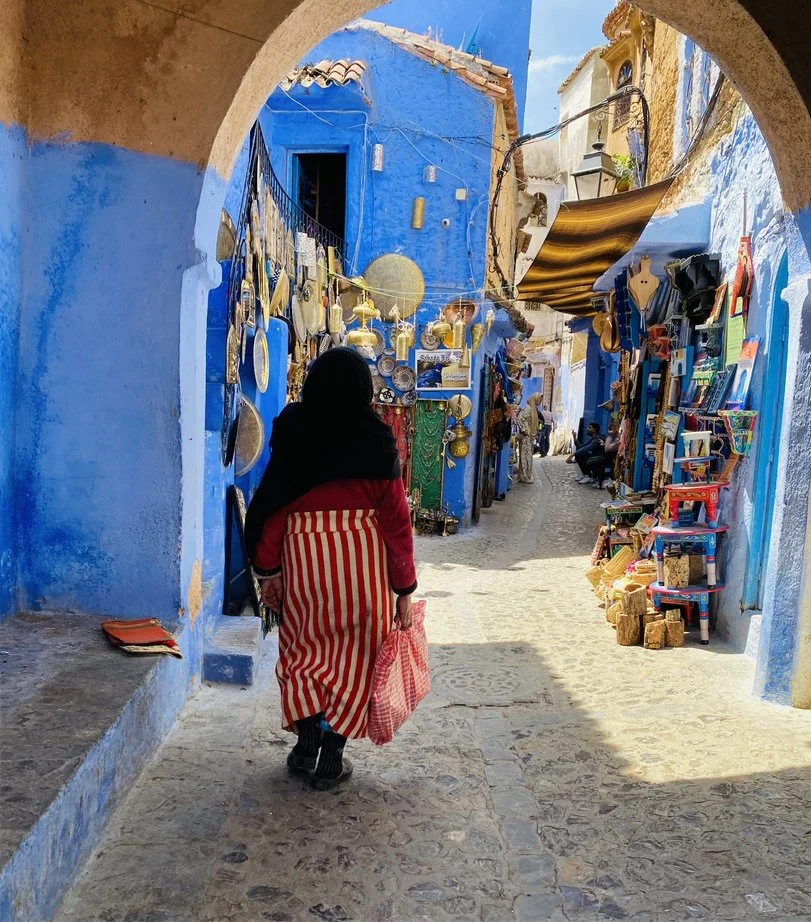
Daily Life in the Medina, Chefchauen, Morocco, ©photo by Alain Bañon, Mamut Pastels 2026
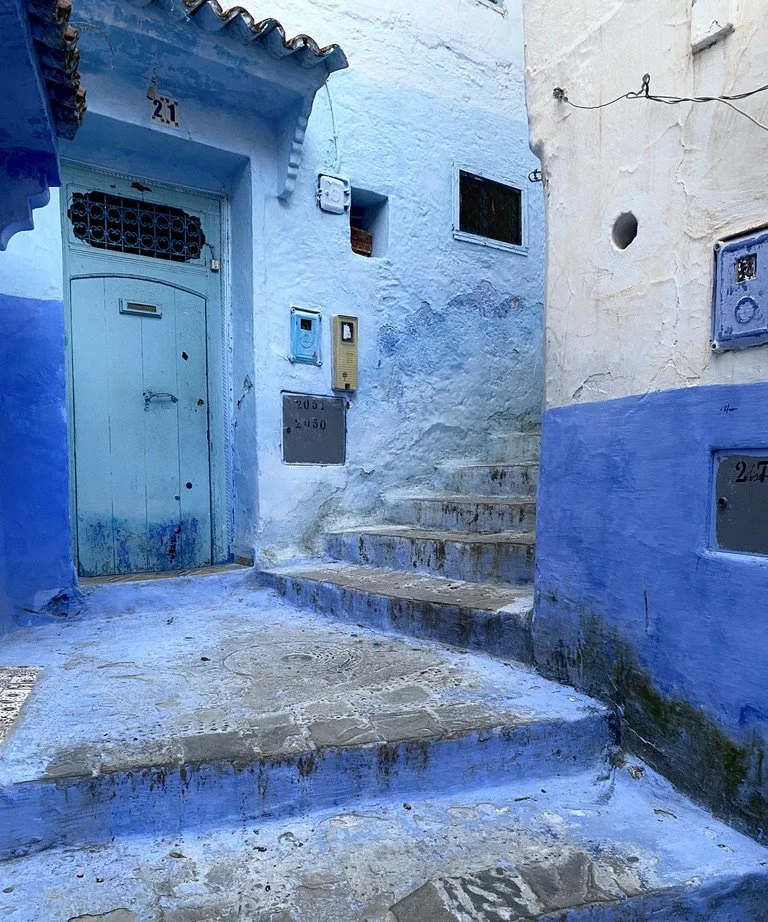
Chefchaouen, Morocco, ©photo by Alain Bañon, Mamut Pastels 2026
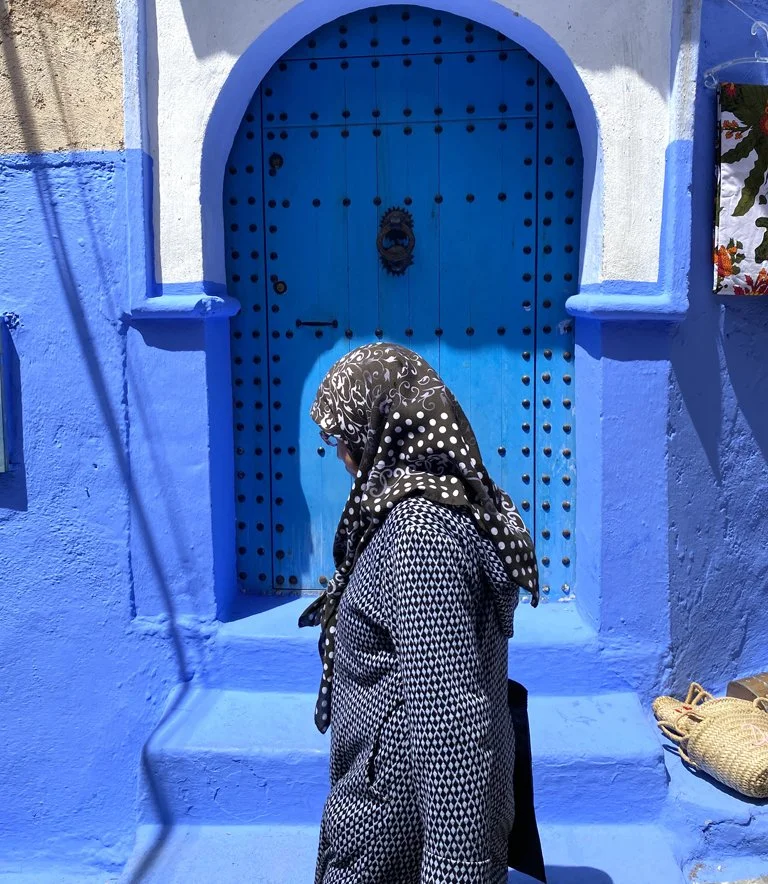
Chefchaouen, Morocco, ©photo by Alain Bañon, Mamut Pastels 2026
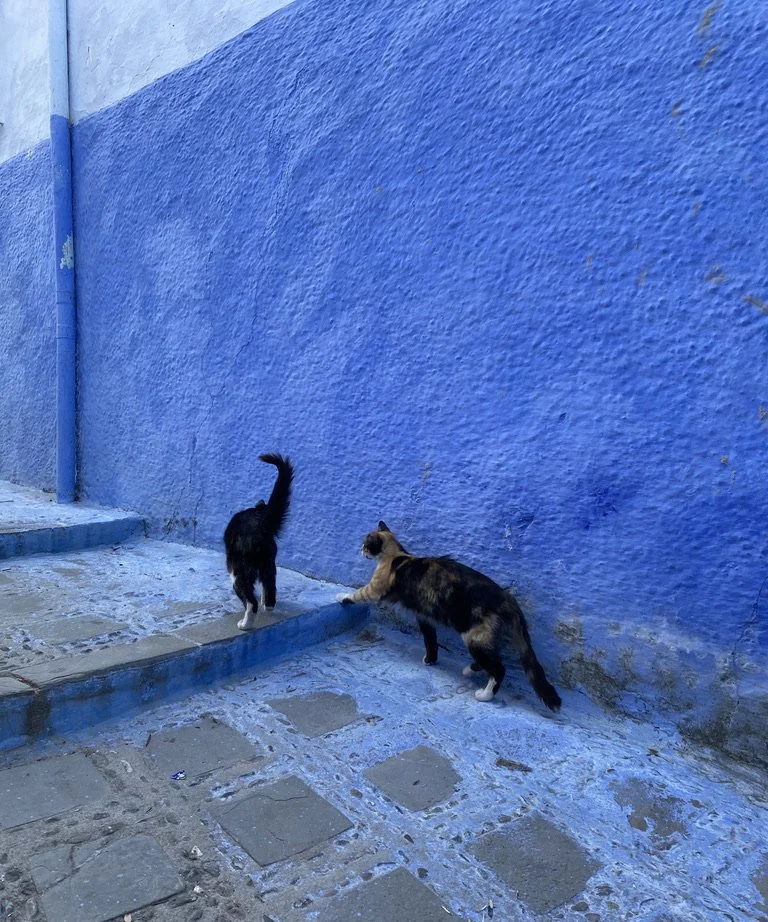
Two cats, Blue stairs, Chefchaouen, Morocco 2026, ©photo by Alain Bañon 2026

Walking through the old medina, Chefchaouen, Morocco ©photo by Alain Bañon 2026
But beyond these bustling and now largely touristic spaces, Chefchaouen retains its essence: its narrow streets, its deserted corners. The passage of time etched into the walls, revealing layers and layers of mortar made of sand, lime, and blue dye.
The city, also known as the "Pearl of the North", invites you to stroll through it at a leisurely pace. To discover it corner by corner, street by street, nook by nook. To get lost in its medina. Although no one truly knows why its facades are painted blue (not just one shade, but many different blues), there are various theories about the origin of its characteristic colour.
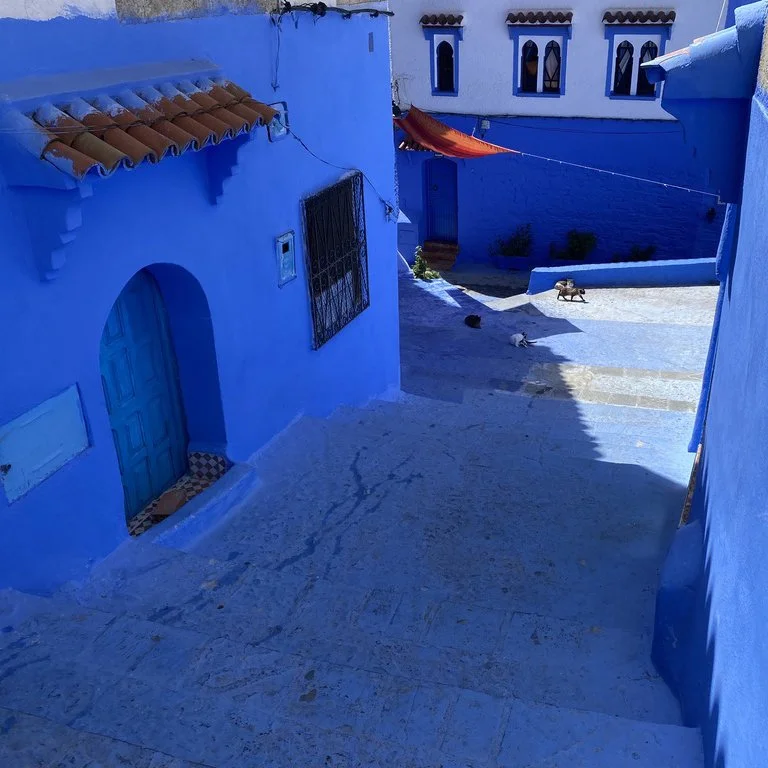
Chefchaouen streets, Chefchaouen, Morocco, ©photo by Alain Bañon, Mamut Pastels 2026

Detail in blue, Chefchauen, Morocco, ©photo by Alain Bañon, Mamut Pastels 2026

Selling local products, Chefchaouen, Morocco, ©photo by Alain Bañon, Mamut Pastels 2026
According to some residents, the walls of Chefchaouen are painted in all shades of blue to represent the different hues of the Mediterranean Sea. Others say they were painted to protect against mosquitoes. Still other popular theories suggest that Sephardic Jewish refugees who fled Europe in the 15th century began painting their houses blue. In their tradition, this color represents the sky and the divine. Chefchaouen was for centuries considered a sacred city, where foreigners were forbidden entry, which helped preserve its medieval character with few alterations.
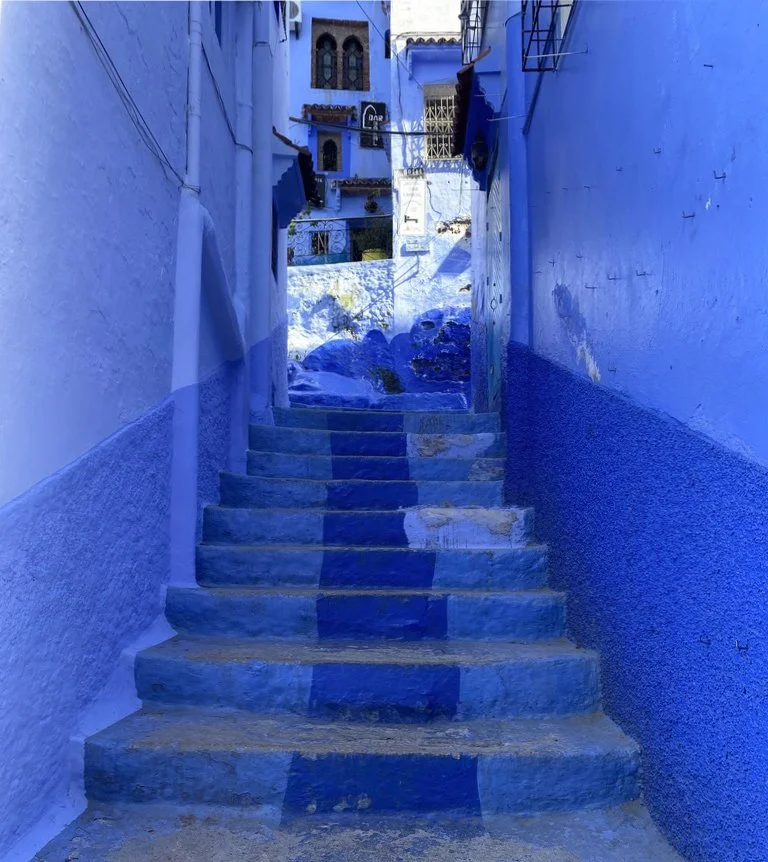
Blue stairs, Chefchaouen, Morocco, ©photo by Alain Bañon, Mamut Pastels 2026

Antique door in blue, Chefchaouen, Morocco, ©photo by Alain Bañon, Mamut Pastels 2026
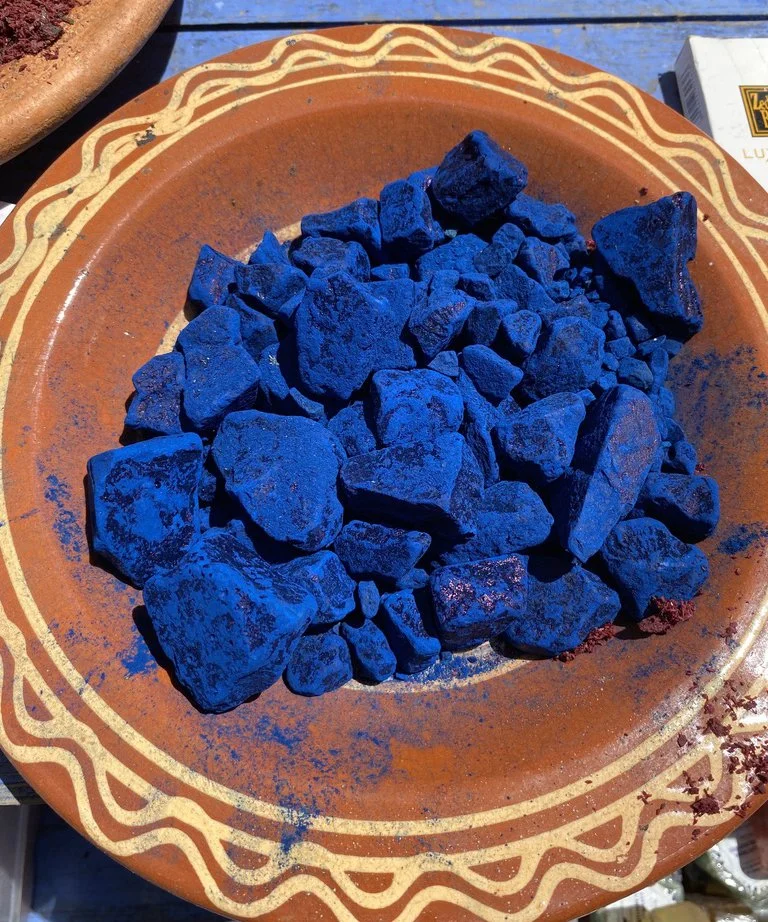
Blue Nila in stone, Chefchaouen, Morocco, ©photo by Alain Bañon, Mamut Pastels 2026

A moment of contemplation, Chefchaouen, Morocco, ©photo by Alain Bañon 2026
One can stroll through its streets and feel as if stepping back centuries in time, surrounded by its silences, its people, under a serene blue sky. Returning to places where one felt happy, returning to the past, is a way of reconnecting with oneself, of remembering what once was and gaining a much better understanding of where one is headed.

Chefchaouen, Morocco, ©photo by Alain Bañon, Mamut Pastels 2026
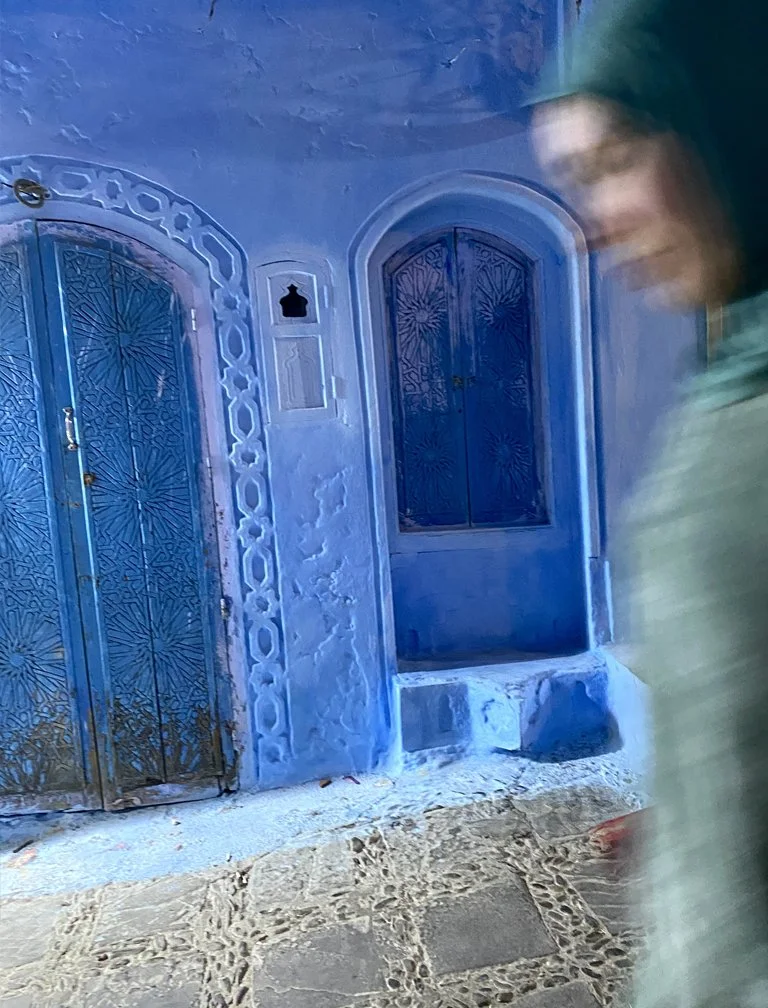
Chefchaouen, Morocco, ©photo by Alain Bañon, Mamut Pastels 2026
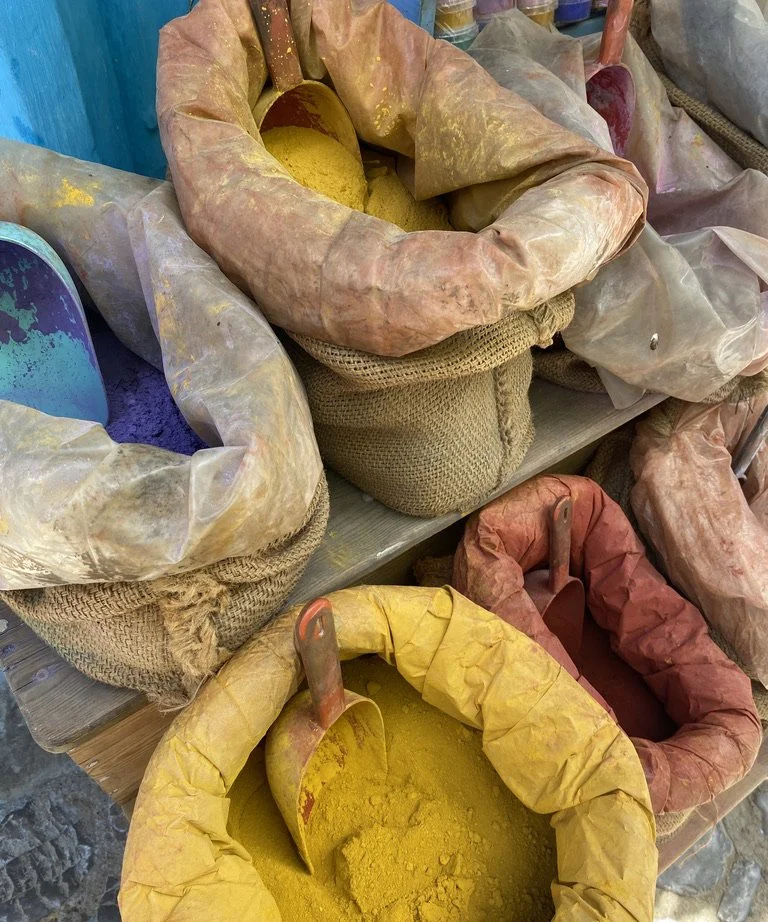
Pigments, Chefchaouen, Morocco, ©photo by Alain Bañon, Mamut Pastels 2026

Chefchaouen, Morocco, ©photo by Alain Bañon, Mamut Pastels 2026